Start with what still works
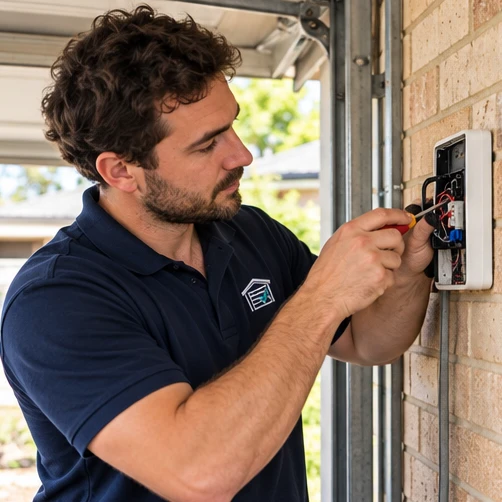
Useful observations include whether the wall control operates the door, whether any remote works and whether the motor makes a sound. Notice if the opener light flashes or a display shows a message, and record the wording if it is visible from the floor. Check only ordinary user controls and accessible power connections in accordance with the product instructions. Do not remove covers or handle wiring. A remote battery issue, a control fault and an overloaded opener can produce similar frustrations, but they need different responses once the system has been assessed.
When the motor runs but the door stays still
A running opener does not prove that the whole lifting system is functioning. There may be a problem in the drive, the door connection or the mechanism the opener is trying to move. If the door is heavy, crooked or visibly damaged, stop operating it. Do not reconnect or release a mechanism while standing beneath a partly raised door. People looking for garage door repair near me often describe this as a motor failure; explaining exactly what moves and what does not gives the inspection a more useful starting point.
Reversing, stopping and intermittent operation
A door that reverses near the floor may be responding to an obstruction or a safety input, but binding and setup issues can also play a part. Keep the path clear and gently clean accessible sensor lenses if the manufacturer recommends it. Avoid bypassing sensors or increasing force settings to push through resistance. Intermittent behaviour is easier to investigate when you can say whether it occurs at a particular position, in certain conditions or with a particular control. Those details help distinguish a recurring mechanical issue from a control or detection problem.
Repairing or replacing the opener
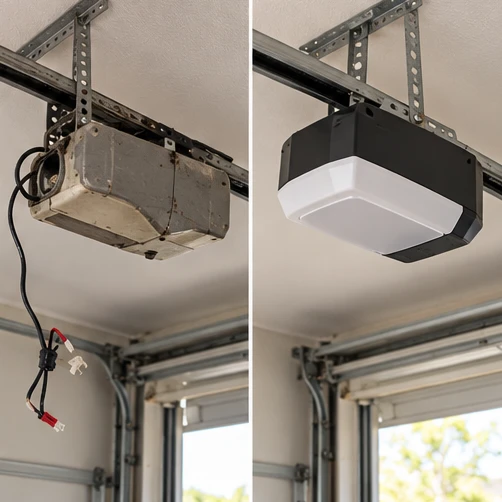
The appropriate choice depends on the fault, the condition of the unit and the availability of compatible components. A repair may be practical for one installation while replacement makes more sense for another. Ask about compatibility with the existing door, controls and safety devices before authorising a replacement. Discuss which features are included, how remotes will be set up and what operating instructions you will receive. We do not assume that every unreliable opener needs a new motor; the mechanical condition of the door should inform that decision.
Checks after the work
Following an opener repair or replacement, operation should be checked through the door’s travel. Relevant controls, stopping behaviour and safety features need attention according to the installation and product instructions. Ask for a demonstration of normal operation and guidance on user maintenance. Keep manuals, remote information and invoices together so the system can be identified later. If a door begins to scrape or hang unevenly after an electrical symptom has been resolved, arrange further advice rather than compensating with additional force or repeated remote commands.
Arrange an opener assessment
Have the opener brand or model ready if it can be read safely. Tell us the suburb, door style and whether the garage is currently accessible. For a controlled Southbank building entry, confirm access with the responsible property contact. Call rather than relying on email when the door is stuck and you need to discuss the situation promptly. If you are comparing garage door repair service near me for automatic access, ask how the fault will be established and how the proposed work will be explained before you approve it.